
This article describes how to create and configure a Citrix Workspace App session on IGEL OS using an IGEL UMS profile.
The functionality between IGEL OS 11 and IGEL OS 12 has changed fundamentally. While in IGEL OS 11 only one StoreFront and SelfService session can be created, IGEL OS 12 allows multiple sessions of both types to be created. Multiple StoreFront sessions can run simultaneously, whereas only one SelfService session can run at a time due to a Citrix design limitation.
For information on the Citrix Workspace App global settings, see Configuration of the Citrix Workspace App on IGEL OS.
This article is based on Citrix Workspace App version 2604 BUILD 1.0.
Apps that Are Installed with the Citrix Workspace App
When the Citrix Workspace app is installed, the following app is installed automatically:
-
Citrix Multimedia Codec
Requirements
-
Citrix Workspace App is imported to your IGEL UMS. For details on app import, see How to Import IGEL OS Apps from the IGEL App Portal.
How to Create a Session
-
In the IGEL UMS Web App, create a profile configuring the app. For details on profile creation, see How to Create and Assign Profiles in the IGEL UMS Web App.
-
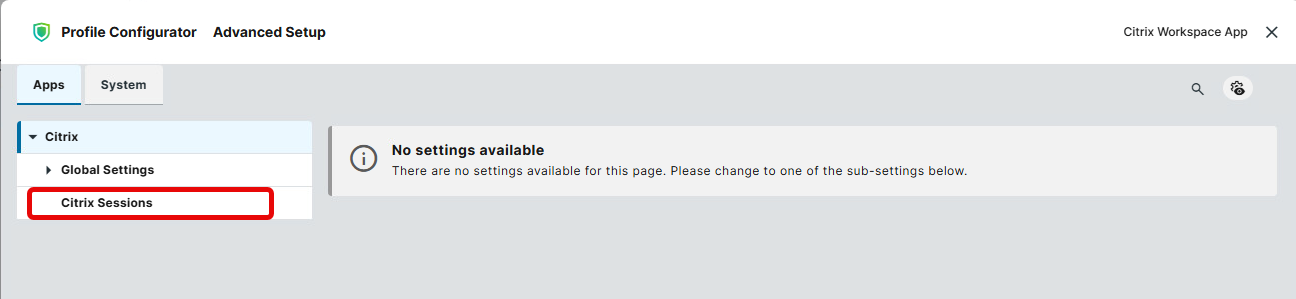
In the Profile Configurator, go to Apps > Citrix > Citrix Sessions.
-
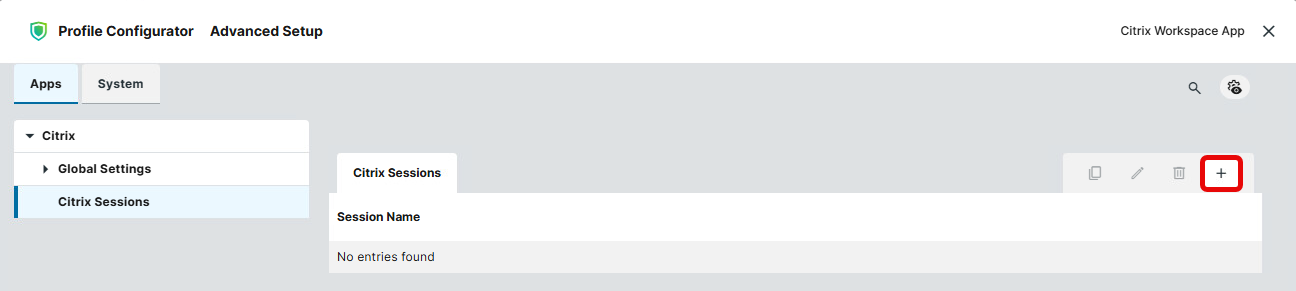
Click

The session is created.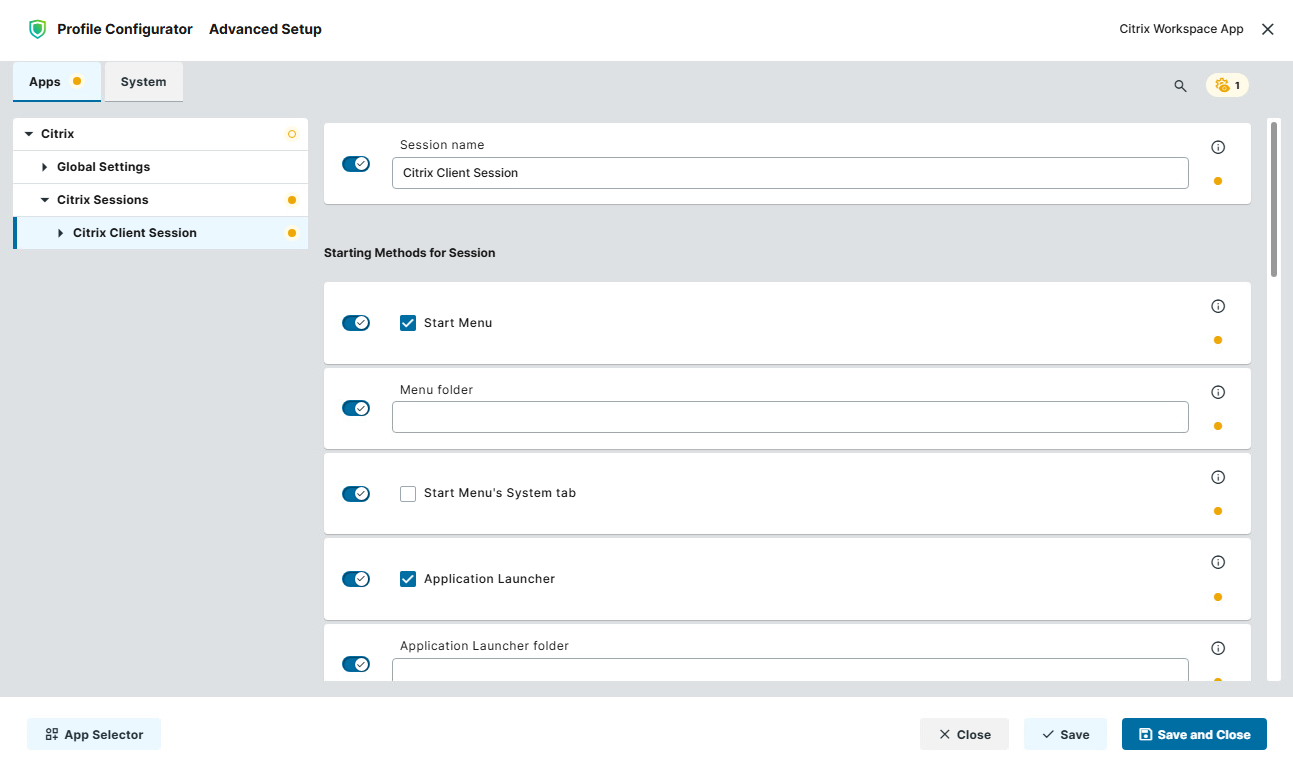
-
Define the starting methods for the session. The starting methods parameters are described under Starting Methods for Apps.
-
Configure the Server, Authentication and Appearance settings for the session, see below.
-
Configure other settings as needed, see Configuration of the Citrix Workspace App on IGEL OS.
-
Save the settings and assign the profile to the required devices.
Configuring the Session’s Server
-
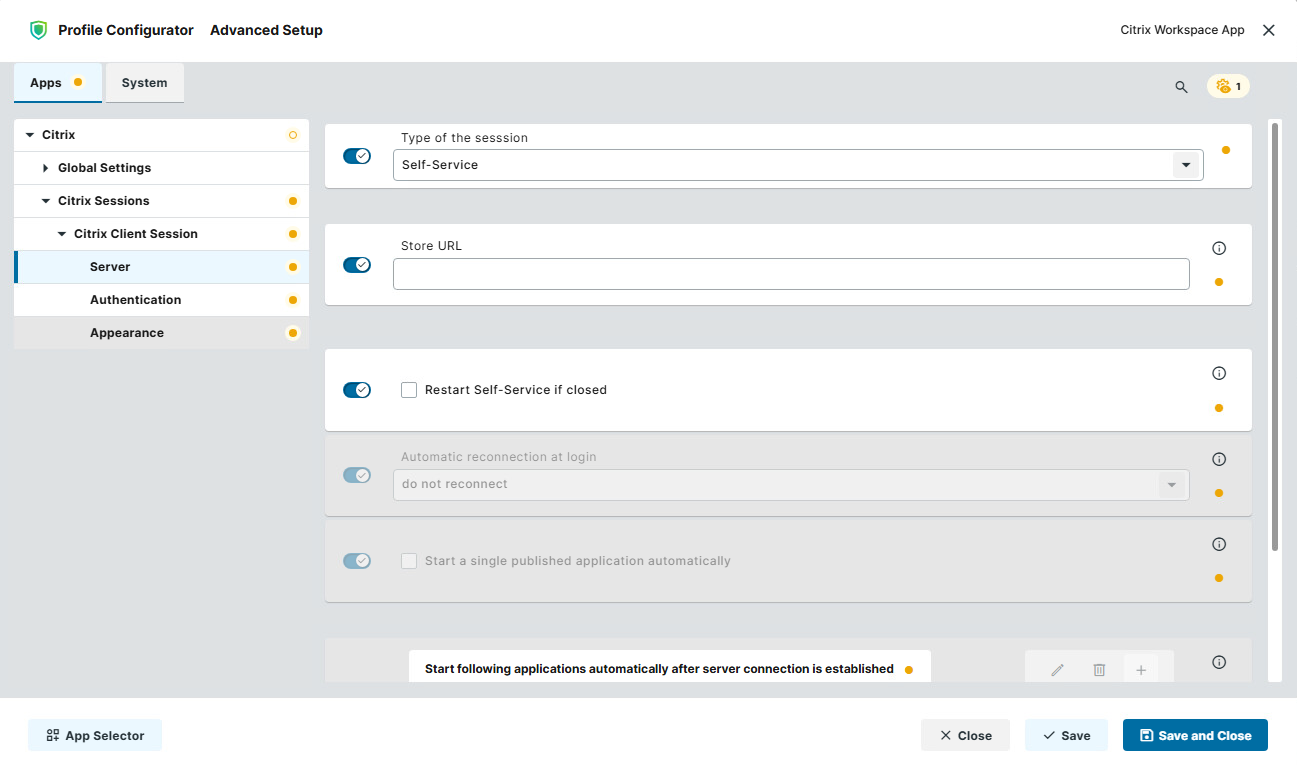
In the Profile Configurator, go to Apps > Citrix > Citrix Sessions > [session name] > Server.
-
Edit the settings according to your needs. The parameters are described below.
Type of the session
Select the session type.
Possible values:
-
Self-Service: Uses the Citrix Workspace app Self-Service user interface to provide access to published applications and desktops. After connecting to a store, users can select and launch the resources available to them.
-
StoreFront: Uses StoreFront to access and launch published applications and desktops. The storebrowse command-line interface (CLI) is used to create icons for resources from the store on the desktop or quick start panel, providing direct access to these resources.
Store URL
Enter the URL of the Citrix store. Example: https://URL.Domain/Citrix/Store
Restart Self-Service if closed
This setting is available if Type of the session is set to Self-Service.
- Self-Service is restarted when the session is closed.
- Self-Service is not restarted. (Default)
Automatic reconnection at login
Specifies whether existing sessions are automatically reconnected when the user logs in. This setting is available if Type of the session is set to StoreFront.
Possible values:
-
do not reconnect: Does not reconnect existing sessions.
-
active and disconnected sessions: Reconnects active and disconnected sessions.
-
disconnected sessions only: Reconnects disconnected sessions only.
Start a single published application automatically
Automatically starts the published application or desktop after successful login if only one application or desktop is available.
Start following applications automatically after server connection is established
The following applications will be automatically launched as soon as the connection to the server is established. This setting is available if Type of the session is set to StoreFront.
To manage the list of applications:
-
Click

-
Click

-
Click

Configuring the Session’s Authentication
-
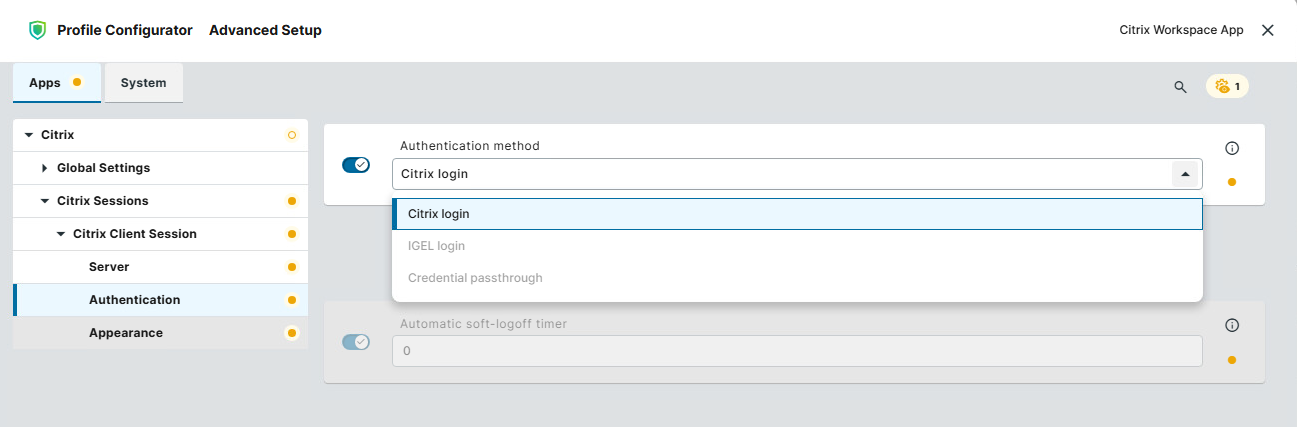
In the Profile Configurator, go to Apps > Citrix > Citrix Sessions > [session name] > Authentication.
-
Edit the settings according to your needs. The parameters are described below.
Authentication method
Select the method used to authenticate the user.
Possible values:
-
Citrix login: The Citrix login dialog is used. (Default)
Smartcard Authentication for Citrix Sessions in IGEL OS 12
If the server offers smartcard authentication, it will be automatically used. No settings need to be made on the client side.
-
IGEL login: The fields for Username, Domain, and Password become active. If all fields are filled in by the user, the login is performed automatically. If none or only a part of the fields are filled, the IGEL OS login dialog is presented to the user.
To use this authentication method, make sure the following requirements are met:
-
HTTP basic authentication is enabled on the server and the endpoint device. The relevant registry parameter is
app.cwa.authman.protocols.httpbasic.enabled(enabled by default). Web pages served via HTTPS will always be encrypted, regardless of this setting. -
You are using Citrix on-premises; this method is not available for the cloud solution.
-
To ensure an encrypted connection, HTTPS should be specified in the Store URL on the Server page.
-
Credential passthrough: Uses local login data for listing and launching applications. The option enables single sign-on if login with AD/Kerberos is configured on the device.
To use this authentication method, make sure the following requirements are met:
-
HTTP basic authentication is enabled on the server.
-
You are using Citrix on-premises; this method is not available for the cloud solution.
-
To ensure an encrypted connection, HTTPS should be specified in the Store URL on the Server page.
Reporting User Login History to the UMS
As of Citrix Workspace App version 2604 BUILD 1.0, Citrix sessions automatically report login and logout events to the UMS, provided UMS Console > UMS Administration > Misc Settings > Enable user login history checkbox is activated.
Each login (storebrowse and selfservice) reports the user, domain, and logon type. Reports include IGEL login, Citrix login, and Credentials passthrough. authentication types.
For Citrix Login authentication, login and logout lifecycle records are created with placeholder values for USER and DOMAIN, as the actual Citrix-authenticated user identity is not available at the point of reporting. Only login and logoff times are meaningful in this mode.
Selfservice limitation: Selfservice's ability to restart immediately after closing depends on configuration. Logout reporting is deferred while restart is enabled and finalized when the session ends. Logout is reported when the selfservice session ends (when the selfservice window closes). On restart, logout is deferred and reconciled as a single logout on the next startup.
Automatic soft-logoff timer
Specifies the time in seconds after which the user is automatically logged off while existing sessions continue to run. This setting is available if Type of the session is set to StoreFront. Values below 30 seconds disable the automatic soft logoff. (Default: 0)
Configuring the Session’s Appearance
-
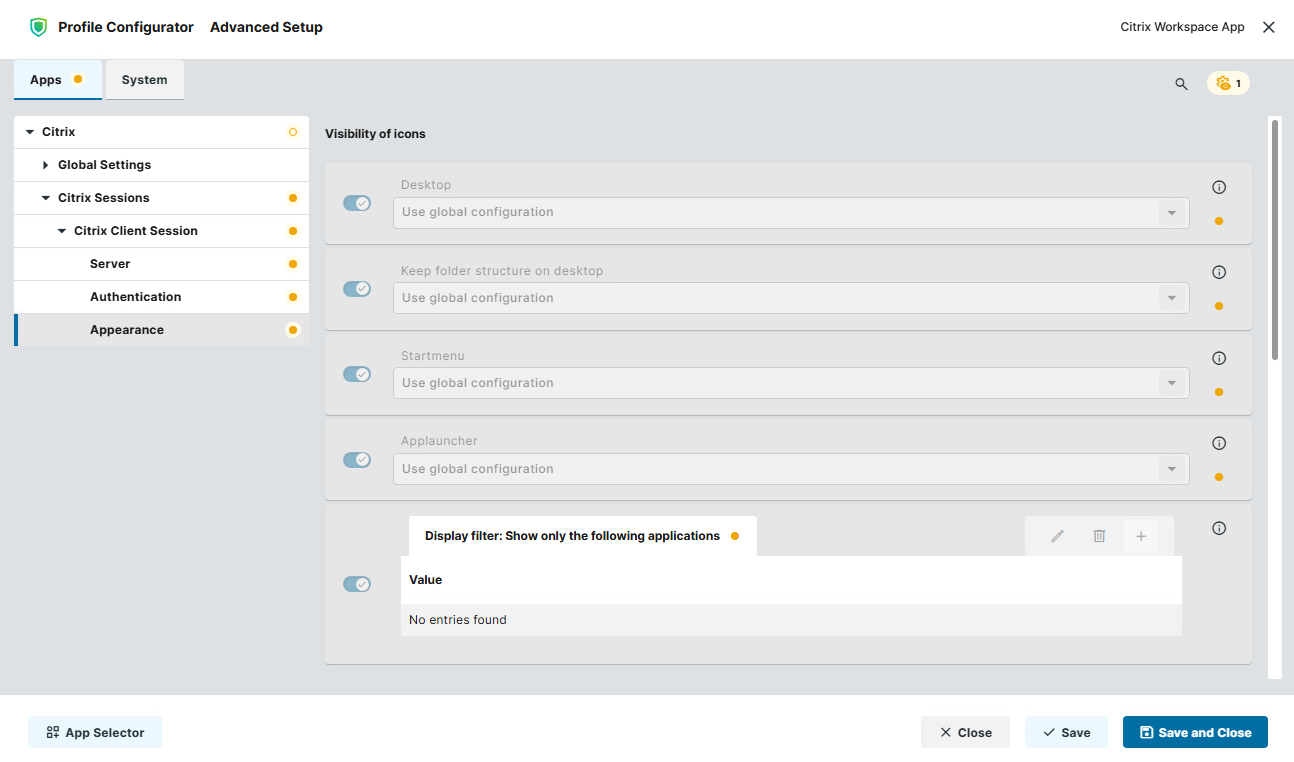
In the Profile Configurator, go to Apps > Citrix > Citrix Sessions > [session name] > Appearance.
-
Edit the settings according to your needs. These settings are available if Type of the session under Server is set to StoreFront. The parameters are described below.
Desktop
Specifies which applications are displayed on the desktop.
Possible values:
-
Use global configuration (Default): Uses the Desktop setting configured under Apps > Citrix > Global Settings > Appearance.
-
Show all apps: Displays all applications on the desktop.
-
Do not show apps: Does not display applications on the desktop.
-
Show only apps from Display filter: Displays only applications that match the Display filter: Show only the following applications.
Keep folder structure on desktop
Specifies whether desktop shortcuts retain the folder structure defined on the Citrix server.
Possible values:
-
Use global configuration (Default): Uses the Keep folder structure on desktop setting configured under Apps > Citrix > Global Settings > Appearance.
-
true: Retains the folder structure defined on the Citrix server.
-
false: Displays the shortcuts without the folder structure.
Startmenu
Specifies which applications are displayed in the start menu.
Possible values:
-
Use global configuration (Default): Uses the Startmenu setting configured under Apps > Citrix > Global Settings > Appearance.
-
Show all apps: Displays all applications on the startmenu.
-
Show only apps from Display filter: Displays only applications that match the Display filter: Show only the following applications.
-
Do not show apps: Does not display applications on the startmenu.
Applauncher
Specifies which applications are displayed in the application launcher.
Possible values:
-
Use global configuration (Default): Uses the Applauncher setting configured under Apps > Citrix > Global Settings > Appearance.
-
Show all apps: Displays all applications on the Applauncher.
-
Show only apps from Display filter: Displays only applications that match the Display filter: Show only the following applications.
-
Do not show apps: Does not display applications on the Applauncher.
Display filter: Show only the following applications
Specify the applications to be displayed when Show only apps from Display filter is selected. Wildcards are supported, for example, Wordpad or Word*.
To manage the list of applications:
-
Click
-
Click
-
Click
Quickstart panel
Specifies which applications are displayed in the quick start panel.
Possible values:
-
Use global configuration (Default)
-
Show only apps from Display filter
-
Do not show apps
Display filter: Show only the following applications in quick start panel
Specify the applications to be displayed in the quick start panel. Wildcards are supported, for example, Wordpad or Word*. Only applications matching the filter are displayed.
To manage the list of applications:
-
Click
-
Click
-
Click
Visibility of logoff icon
Specifies where the logoff icon is displayed.
- Desktop: Displays the logoff icon on the desktop. (Default)
- Startmenu: Displays the logoff icon in the start menu. (Default)
- Applauncher: Displays the logoff icon in the application launcher. (Default)
- Quickpanel: Displays the logoff icon in the quick start panel.
- Quickpanel: Does not display the logoff icon in the quick start panel. (Default)